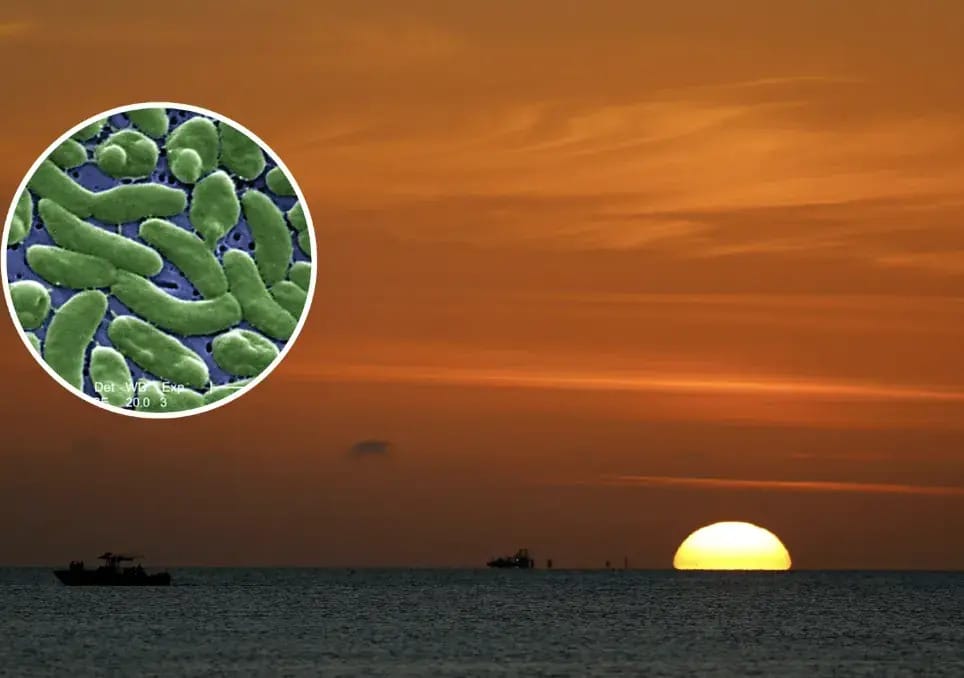
A Dangerous Trend: Cases Hit 33 for 2025
Florida health authorities have confirmed 33 cases of Vibrio vulnificus so far in 2025, with 5 fatalities linked to the infections.
Once considered rare, this “flesh-eating” bacterium is increasingly appearing in warm coastal and brackish waters — a reminder that water fun in the Sunshine State carries real risk under the right conditions.
The infection count has nearly doubled since earlier in the summer, when reported cases hovered around 20.
Why Vibrio vulnificus Isn’t Something to Ignore
Vibrio vulnificus thrives in salty or brackish water where fresh and saltwater mix — exactly the kind of estuaries, inlets, and shallow coastal waters common in Southwest Florida.
For most healthy beachgoers, the risk is low. But for people with existing health conditions (like liver disease, weakened immune systems, or chronic illness), the bacteria can cause severe — even deadly — infections.
Infections can come from two main paths: handling or eating raw shellfish (especially oysters), or having open wounds — even small cuts or scrapes — exposed to contaminated water. Once exposed, the bacterium can cause rapid skin breakdown, tissue damage, and in severe cases, bloodstream infections.
Florida already leads the country in Vibrio cases, and this year’s surge underscores just how dangerous warm-water exposure can be this close to home.
Collier County’s Role — And Local Risk Factors
Our region isn’t immune. Residents in Collier County have previously contracted Vibrio — for example, a recent case involved a Naples man who got infected while fishing and handling fish near the water.
Warm Gulf waters, popular fishing habits, and frequent shellfish consumption combine to create a higher-risk environment. Plus, with injuries from storms or even minor fishing snaps, even a tiny cut can become a threat when exposed to brackish water.
Given that many local residents and visitors rely on fishing, shellfish, and water recreation year-round, the current outbreak should serve as a wake-up call.
Simple Yet Critical Steps to Stay Safe
Avoid eating raw or undercooked oysters and shellfish during warmer months, or when water temperatures rise. If you harvest shellfish yourself — make sure you cook them thoroughly.Never wade into or swim in coastal or brackish water with any open wounds, cuts, or scrapes. Even small nicks from fishing lines or rocks can become entry points for infection.If you handle raw seafood, use gloves. Always wash hands and any exposed skin thoroughly after.
If you begin feeling ill after water exposure or shellfish consumption — or notice redness, swelling, or skin changes near a wound — get medical attention immediately. Vibrio infections can worsen fast, especially for people with underlying health issues.
Why This Should Matter to Naples-Marco Area Residents
As more people move to or visit Southwest Florida, and as coastal recreation remains a huge part of local lifestyle — fishing, boating, beach-going — the risk of Vibrio infection rises too. The 2025 spike is a timely reminder that warm weather and Gulf access come with responsibilities.
For local media, health outreach, and coastal businesses — restaurants, fishing charters, marinas — this news highlights an urgent public-health messaging opportunity. Informing residents and visitors about the risks and precautions could literally save lives.
For everyone else: treat coastal water with respect. A small cut at the wrong time can turn into a serious fight for health.