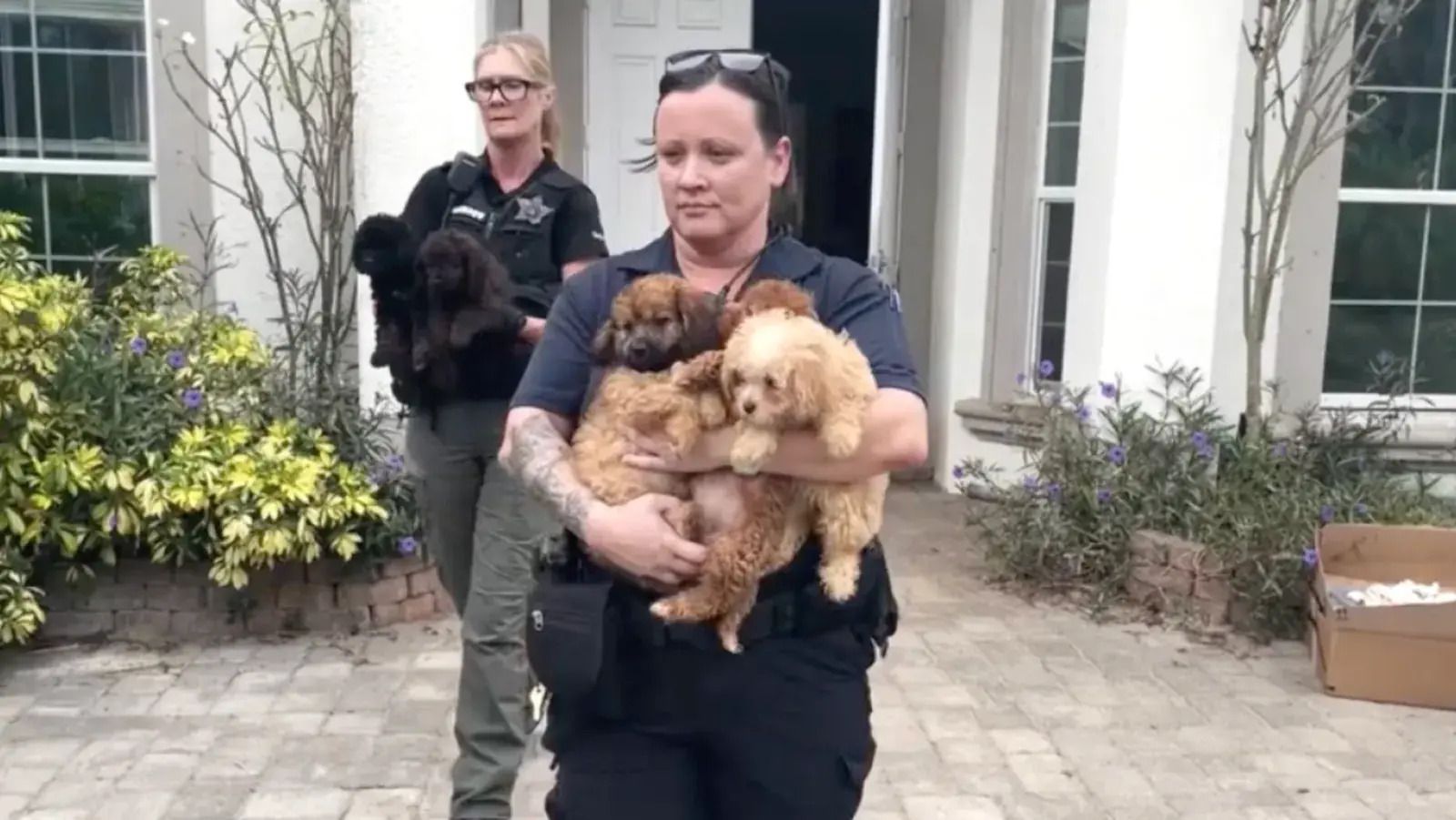
A Naples woman is facing criminal charges after authorities uncovered an alleged illegal dog-breeding operation where roughly 50 dogs were rescued from poor conditions, marking one of the largest animal rescue cases in Collier County in recent memory.
The investigation began after local animal control and law enforcement received complaints about multiple dogs being kept in what appeared to be substandard conditions at a residential property. Responders found scores of dogs — many showing signs of neglect and overcrowding — and took them into protective custody.
What Authorities Found
At the scene, officers discovered about 50 dogs of various breeds living in cramped and unsanitary conditions that violated Florida’s animal welfare laws. Several of the dogs were reported to be in poor physical health, prompting immediate veterinary care following their rescue.
Animal control officials worked with local shelters and rescue organizations to ensure the animals received proper care, including medical evaluations, vaccinations, and clean, safe housing. Some have been placed with rescue partners and foster families while authorities continue to sort through the case.
Charges and Legal Process
The homeowner, a Naples resident, was arrested and charged under Florida statutes related to animal cruelty, illegal breeding practices and failure to properly care for animals. Prosecutors say the alleged operation did not meet state or county requirements for breeding establishments, including mandated standards for space, sanitation, and veterinary oversight.
The charges could carry significant penalties if the defendant is convicted, with potential fines and probation or jail time under Florida’s animal cruelty laws. State and local officials say they aim to hold violators accountable in order to deter similar abuses.
Animal Welfare & Community Impact
Collier County animal control spokespersons described the scene as one of the most significant residential animal rescues in recent years, noting that the sheer number of dogs found in poor conditions prompted urgency in both rescue and legal response.
Local shelters were stretched but rallied to support the intake. Volunteers and animal welfare groups also stepped in to help with transport, care, and rehoming efforts — a testament to community engagement when large rescue operations occur.
What Happens Next for the Dogs
Many of the rescued dogs are currently undergoing health assessments and treatment. A number of animals were visibly underweight or suffering from treatable ailments, according to veterinary staff involved in the intake.
Animal shelters and rescue organizations often rely on community support — from donations to volunteer foster homes — to help rehabilitate animals coming out of cases like this. Officials encourage anyone interested in assisting with rehoming efforts to connect with local rescue partners.
How This Case Fits a Larger Trend
Illegal dog breeding operations, sometimes known as “puppy mills” when run at scale, are a persistent issue nationwide. These facilities are often criticized for prioritizing breeding volume over animal health, resulting in overcrowding, lack of veterinary care, and neglect.
Across Florida and the U.S., law enforcement and animal welfare advocates continue pushing for stronger oversight and enforcement to protect animals and inform buyers about responsible sources for adopting pets.
Community Response
Neighbors and local residents expressed concern about the findings, noting that the discovery has sparked renewed conversations about animal welfare in residential neighborhoods. Some have called for stronger community reporting and tighter regulation of breeding operations to prevent future harm.
Residents interested in reporting suspected animal cruelty are encouraged to contact Collier County Animal Services or local law enforcement with information.