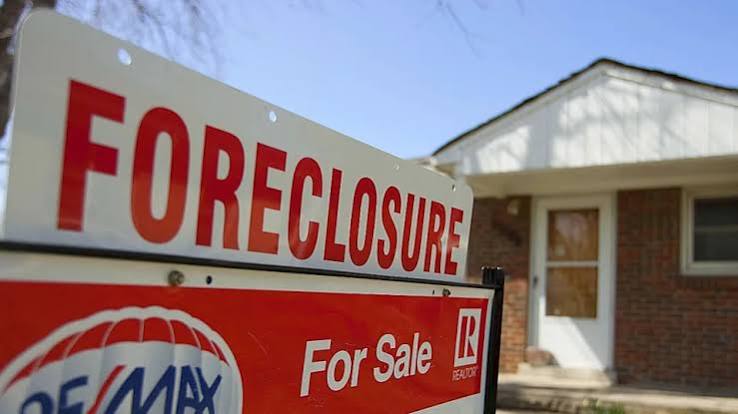
That’s the kind of number that can make homeowners nervous — especially in Southwest Florida, where foreclosure headlines have been popping up more frequently this year.
Through the first nine months of 2026, mortgage foreclosure filings in Lee County increased 85.7% compared with the same period last year, according to the latest report from the Southwest Florida Real Estate Investors Association.
September alone recorded 168 mortgage foreclosure notices, up 23.5% from September 2025. Pasted markdown
Those numbers are significant.
But before anyone dusts off the 2008 comparisons, there’s another number you need to see:
That’s approximately how September’s foreclosure volume compares with Lee County’s peak during the Great Financial Crisis.
So yes, foreclosures are rising.
No, Lee County is not experiencing 2008 all over again.
Here’s what’s actually happening. 👇
📊 First, the Numbers
168 mortgage foreclosure notices in September 2026
That was slightly lower than August, but 23.5% higher than September 2025.
More significantly, through September, mortgage foreclosure filings were 85.7% higher than during the first nine months of 2025. Pasted markdown
That makes the trend worth watching.
And it isn't happening in isolation.
National foreclosure activity has also been increasing. ATTOM reported that 227,548 U.S. properties had some type of foreclosure filing during the first half of 2026, up 21% from the same period last year.
Florida had the highest state foreclosure rate in the country during that period, with one in every 372 housing units receiving a filing. The Cape Coral-Fort Myers area was also among the country's higher-foreclosure metros. Attom Data
So there is genuine distress in the market.
But there’s a big difference between foreclosures increasing and a foreclosure crisis.
85.7% Sounds Huge. Here's the Missing Context.
This is where the story gets interesting.
According to SWFL REIA's historical comparison, September 2026's 168 mortgage foreclosure notices were roughly comparable with monthly levels seen around September 2006 and September 2014.
Now compare that with October 2008.
At the height of the financial crisis, Lee County's monthly foreclosure volume reached roughly 2,500 to 2,600 cases.
In other words, today's monthly level is only about 6.3% of the 2008 peak. Pasted markdown
That's a very different picture.
2008 peak: ~2,600
September 2026: 168
The increase we're seeing now is meaningful.
The magnitude isn't remotely comparable.
📉 How Can Foreclosures Be Up 85.7% Without a Crisis?
Because percentages need a starting point.
When foreclosure activity climbs from relatively low levels, percentage increases can become dramatic quickly.
That doesn't make the increase meaningless. An 85.7% year-to-date jump absolutely deserves attention.
But the percentage tells us how quickly the number changed.
It doesn't tell us how historically large the resulting number is.
That's why both numbers belong in the story.
Foreclosures are rising rapidly from their recent levels, while remaining dramatically below Great Financial Crisis levels.
Both things can be true at once.
🏠 There's Another Major Difference From 2008: Equity
One of the biggest distinctions identified by SWFL REIA is the financial position of homeowners.
During the housing crash, large numbers of homeowners owed more on their mortgages than their properties were worth.
That created a brutal equation:
Can't afford the payment + can't sell the house for enough to repay the loan = very few ways out.
Today's situation is different for many homeowners.
SWFL REIA's earlier 2026 foreclosure analysis describes more equity in the system and characterizes today's distress as more case-by-case than the widespread negative-equity problem experienced during the financial crisis.
That doesn't mean every Lee County homeowner has substantial equity.
In fact, home values have softened in portions of the market. Zillow's Home Value Index shows the typical Lee County home value was down 4.4% year over year through August. Zillow
But today's housing and lending environment is fundamentally different from the conditions that produced the 2008 foreclosure wave.
💸 The Mortgage Isn't the Only Pressure
Here's another reason this story is more complicated than a simple foreclosure count.
Owning a home in Southwest Florida has become more expensive in ways that extend beyond the mortgage payment.
Homeowners may be dealing with:
🏠 HOA and condominium fees
🏢 Condominium assessments and reserve requirements
🔨 Maintenance and storm repairs
📈 Higher borrowing costs
The SWFL REIA report specifically identifies association liens, interest rates and other sources of homeowner financial pressure as factors worth monitoring alongside mortgage foreclosures. Pasted markdown
And not every Lis Pendens filing represents a mortgage foreclosure.
Earlier SWFL REIA analysis found that many non-mortgage filings involved construction and HOA liens, illustrating why the raw Lis Pendens number and the mortgage-foreclosure number shouldn't be treated as interchangeable. SWFL Real Estate Investing
🌴 What About Naples and Collier County?
This is where the Southwest Florida foreclosure story becomes especially important to understand.
Lee County and Collier County are not the same housing market.
ATTOM's midyear data placed the Cape Coral-Fort Myers metro among the country's higher-foreclosure markets.
Collier County's foreclosure rate has historically been lower, although recent reporting indicates distress has been rising there as well. Yahoo Finance
NNN previously examined Naples-area sales data and found 22 foreclosures among 6,253 closed residential sales through June 2026, alongside 38 short sales.
That was less than 1% of total closed transactions. Naples News Now
That doesn't mean Naples is immune from financial pressure.
It means readers should be careful when a headline about “Southwest Florida foreclosures” uses Lee, Charlotte and Collier counties as though they're one identical market.
👀 So What Should We Watch Next?
The September number isn't a reason to panic.
It is a reason to pay attention.
One month doesn't make a housing crisis, and even an 85.7% year-to-date increase needs to be measured against the historically low starting point and the absolute number of cases.
What would become more concerning is if several things begin happening together:
Foreclosure filings continue accelerating.
Home values fall enough to materially erode homeowner equity.
More distressed owners become unable to sell before foreclosure.
Bank repossessions begin rising sharply.
Delinquencies spread beyond isolated households into broader portions of the market.
That's the combination that would tell us something more serious is developing.
We're not there based on the numbers available today.
☕ The Bottom Line
Here's the easiest way to understand the September report:
Are Lee County foreclosures rising?
Is an 85.7% year-to-date increase something to watch?
Does that mean Southwest Florida is experiencing another 2008?
The current numbers don't support that conclusion.
September's 168 mortgage foreclosure notices represent only about 6.3% of Lee County's 2008 monthly peak.
The better description right now is a market experiencing increasing financial distress from relatively low levels — not a foreclosure collapse.
And that's why we'll keep watching it.
Because the most important number won't ultimately be 85.7%.
It'll be what happens next.
Sources & Reporting Credits: Information sourced from the Southwest Florida Real Estate Investors Association (SWFL REIA) September 2026 Lee County Mortgage Foreclosure Report, published October 6, 2026, including data compiled from Lee County public records; ATTOM's Midyear 2026 U.S. Foreclosure Market Report; Florida Housing Data Clearinghouse; FGCU Regional Economic Research Institute; Zillow Home Value Index; and Naples News Now's previous reporting. Foreclosure filings and Lis Pendens notices do not necessarily result in completed foreclosures, and figures compiled from public records may be revised or contain errors or omissions.




.jpg)