For decades, local government budgeting followed a familiar pattern: each department asked for a little more money every year.
Collier County is now rewriting that playbook.
County leaders say a priority-based budgeting system implemented in recent years is already delivering significant financial results — identifying tens of millions of dollars in savings while forcing a deeper examination of how taxpayer money is actually spent.
Instead of automatically increasing department budgets year after year, the new system evaluates every government service based on cost, impact and whether it’s legally required.
The result is a data-driven approach to funding government operations.
A Massive Review of County Services
To implement the strategy, county officials conducted an extensive review of more than 600 different services and programs offered across government departments.
Each service was analyzed and scored using several key criteria, including:
• community impact• operational cost• legal mandates
• alignment with county priorities
This process allowed county leaders to identify programs delivering the strongest return for residents — while also spotting duplication and inefficiencies.
In some cases, departments were consolidated or resources redirected toward higher-priority services.
Millions Already Identified
The results came quickly.
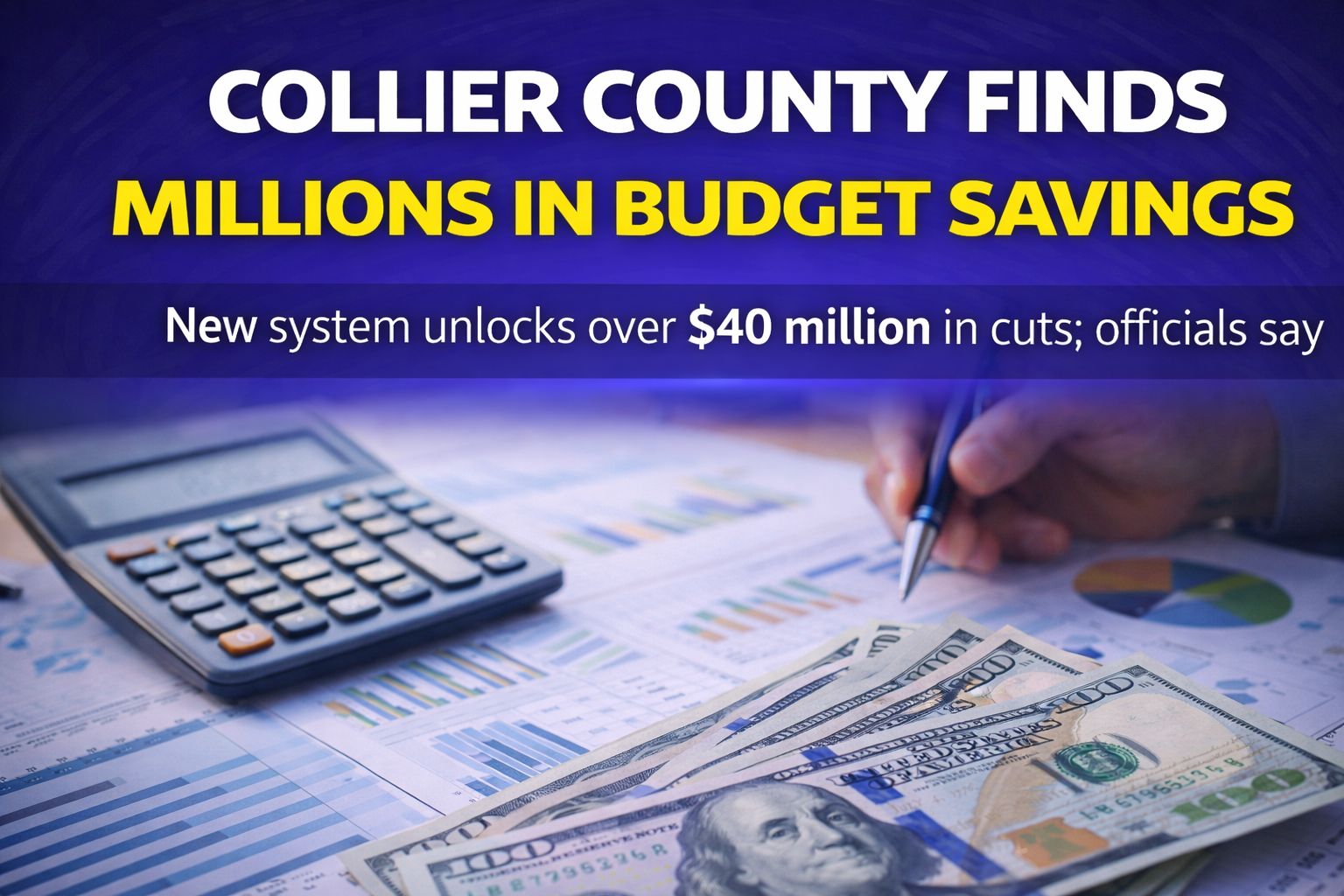
Officials say the initiative uncovered roughly $40 million in immediate savings while also identifying opportunities to redirect up to $150 million toward higher-priority investments.
Some of those savings came from eliminating redundant programs, while others were created through operational efficiencies and smarter resource allocation.
Technology also played a role.
County leaders used specialized budgeting software and data analysis tools to evaluate spending patterns and forecast where money could be used more effectively.
A Response to Rising Costs
The shift comes after years of increasing government spending and rising costs across local services.
Prior to the change, Collier County had experienced more than a decade of property-tax increases, creating pressure from residents and elected officials to find a new approach.
Priority-based budgeting was designed as a way to break the cycle of automatic spending growth.
Instead of asking “how much did we spend last year,” the process now asks a different question:
Which services actually deliver the most value to residents?
Data Over Politics
County officials say one of the biggest benefits of the system is that it shifts decision-making away from emotion and toward measurable outcomes.
By ranking services based on impact and cost, commissioners can more easily determine which programs should receive additional funding and which may need restructuring.
That approach has also created clearer transparency around how taxpayer dollars are allocated.
A New Model for Local Government
Collier County’s budgeting overhaul is part of a broader movement among local governments across the country looking for ways to improve efficiency without raising taxes.
The county’s early results suggest the model may offer a path forward for communities trying to balance rising costs with taxpayer expectations.
And in Collier County’s case, the shift is already reshaping how government thinks about spending — moving from automatic increases to a system built around priorities, data and measurable results.