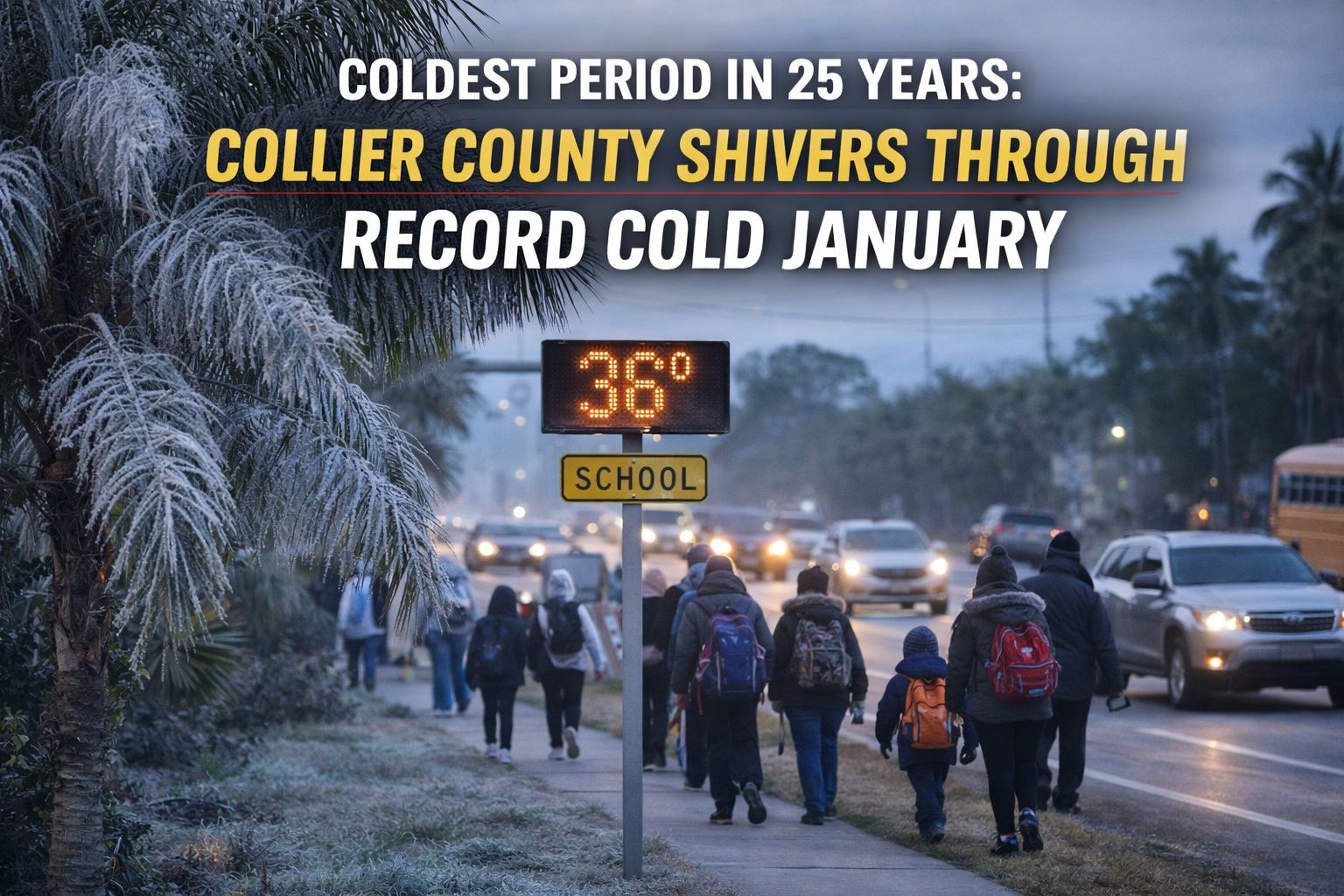
Southwest Florida may be known for sunshine and mild winters, but January 2026 delivered a reminder that cold snaps can still make history. Collier County has now recorded its highest number of cold days in more than a quarter century, marking the coldest sustained stretch residents have experienced since the late 1990s.
According to regional weather data, temperatures repeatedly dipped well below seasonal norms throughout January, with multiple mornings registering in the 30s and low 40s. While occasional cold fronts are not unusual for Florida winters, the duration of this chill is what sets it apart. Meteorologists note that Collier County has not seen this many cold days packed into a single winter period in roughly 25 years.
The prolonged chill has been driven by repeated surges of cold air pushing deep into the Southeast, reinforced by upper-level weather patterns that prevented warmer Gulf air from reestablishing itself. Instead of a quick cooldown followed by a rebound, residents experienced a string of brisk mornings and cooler-than-average afternoons.
How the Cold Affected Daily Life
The colder weather was felt well beyond thermometers. Local schools adjusted outdoor activities during morning hours, while parents bundled children in layers more common in northern states. Many residents dusted off space heaters, heavier jackets, and blankets that typically see little use in Naples winters.
Energy usage also climbed as households relied more heavily on heating systems. Utility providers across Southwest Florida reported increased demand during overnight and early morning hours, a pattern more typical of northern climates than coastal Florida.
Local businesses saw mixed effects. Restaurants with outdoor seating adjusted hours or added heaters to patios, while some retailers benefited from a rare surge in cold-weather apparel sales. Landscaping crews and agricultural operations also had to account for temperature-sensitive plants, particularly during overnight lows that approached frost-level conditions inland.
A Rare Weather Benchmark
Historically, Collier County winters are defined by brief cold fronts followed by extended warm periods. The fact that January 2026 now stands as the coldest sustained stretch in 25 years highlights how unusual this pattern has been.
Weather experts emphasize that while this does not signal a permanent shift in Florida’s climate, it does demonstrate how variable winter weather can be. Even in subtropical regions, atmospheric patterns can occasionally align to produce extended cold conditions.
What Comes Next
Looking ahead, forecasters expect temperatures to gradually return closer to seasonal averages as February approaches. While additional cold mornings remain possible, the frequency and intensity seen earlier this winter are expected to ease.
For long-time residents, the cold snap will likely be remembered as a rare outlier — a winter that briefly made Collier County feel far removed from its usual sun-soaked reputation.