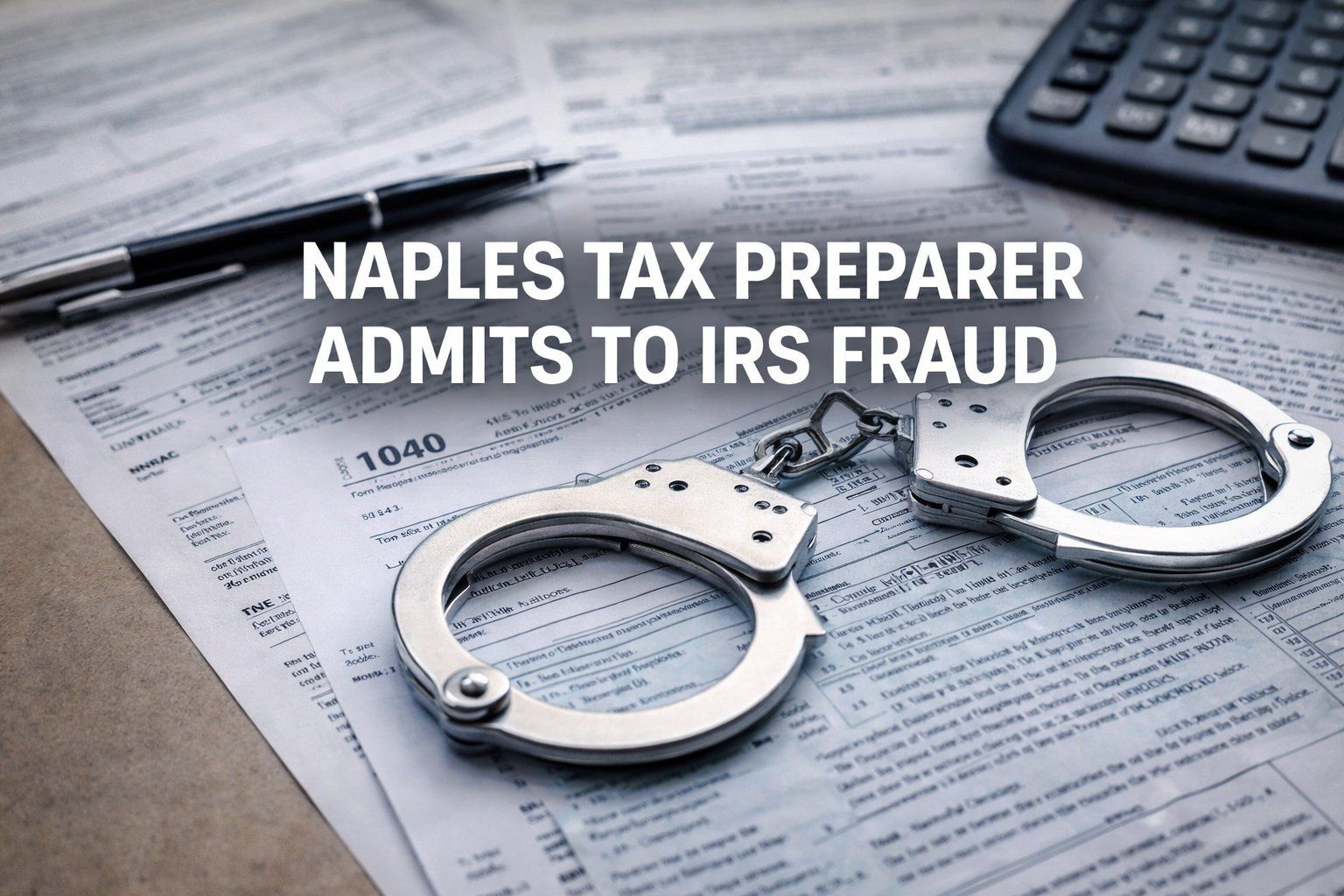
A Naples tax preparer is now facing serious federal consequences after admitting to filing false tax returns—another reminder of how aggressively authorities are cracking down on tax fraud.
According to federal prosecutors, the preparer pleaded guilty to multiple charges tied to falsifying tax documents and submitting inaccurate returns on behalf of clients. The case centers around a scheme that involved manipulating information to generate larger refunds than clients were legally entitled to receive.
The individual, identified as Wilner Cenecharles, operated out of an unlikely location—a local barbershop in Naples—where he met with clients and prepared their returns.
Investigators say the fraud involved adding false business income or losses, as well as claiming credits that didn’t actually apply, all to inflate refunds.
While the refunds may have seemed beneficial to clients at the time, cases like this often come with long-term consequences—not just for the preparer, but for the taxpayers involved if returns are later audited or corrected.
The charges are significant.
Cenecharles pleaded guilty to six counts of assisting in the preparation of false tax returns and two counts of filing false returns. Each count carries a potential prison sentence, and collectively, he faces up to 24 years in federal prison.
He has also agreed to pay more than $65,000 in restitution to the IRS.
Sentencing is expected later this year.
Cases like this aren’t isolated.
Federal agencies have been increasing enforcement around tax preparation fraud, particularly schemes that involve fabricated deductions, false business filings, or improper tax credits. These types of filings can cost the government millions over time and are treated as serious financial crimes.
What’s changed in recent years is how quickly these cases are being identified and prosecuted.
There’s also a local angle that stands out.
Naples isn’t typically associated with this kind of activity, but as the population grows—and more people rely on third-party tax preparers—opportunities for fraud increase. Many taxpayers trust preparers to handle complex filings, which can make it easier for bad actors to take advantage of the system.
That’s why cases like this tend to get attention.
They highlight the importance of choosing qualified, reputable professionals—especially in a place like Southwest Florida, where seasonal residents, new movers, and retirees often rely on outside help for financial and tax-related services.
At the same time, the case underscores something broader about the current environment.
Financial fraud, whether it’s investment schemes or tax-related crimes, is being pursued more aggressively at the federal level. Authorities are making it clear that even smaller-scale operations—like one run out of a local storefront or barbershop—won’t go unnoticed.
For Naples, this is less about one individual case and more about awareness.
Most tax preparers operate legitimately and provide real value. But when something goes wrong, the consequences can be severe—and long-lasting.
And as this case shows, what might seem like a shortcut at tax time can quickly turn into a federal issue.
This story is based on reporting from Business Observer and the U.S. Department of Justice.