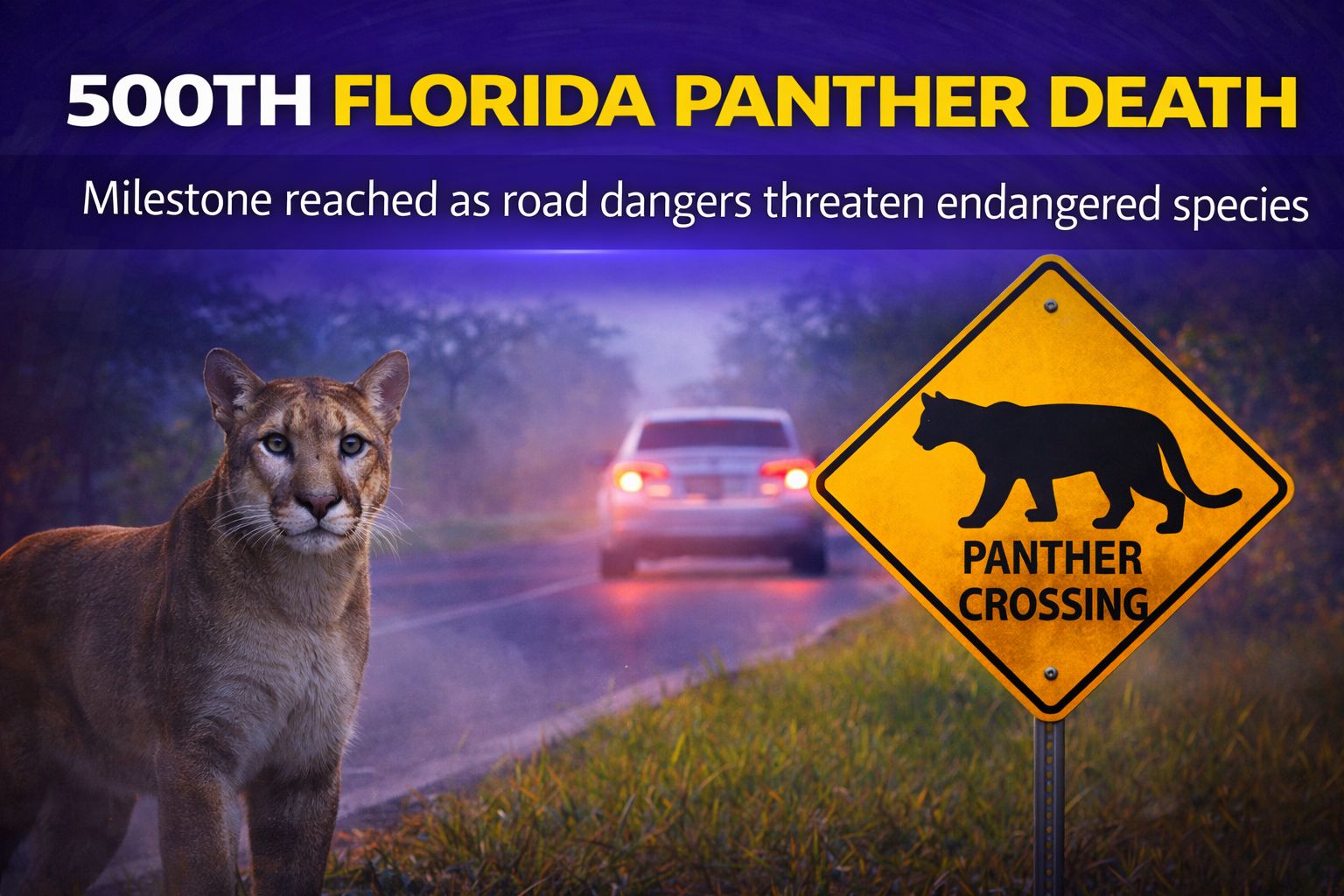
A sobering milestone has been reached for one of Florida’s most iconic animals.
Wildlife officials have confirmed the 500th death of an uncollared Florida panther since tracking began in 2014, according to the Florida Fish and Wildlife Conservation Commission’s Panther Pulse database.
The latest case involved a female panther estimated to be about 5 to 6 years old, discovered dead in Southwest Florida.
While biologists continue investigating the circumstances, most Florida panther deaths share a familiar and troubling pattern.
The leading cause: vehicle collisions on Florida roads.
A Fragile Population
The Florida panther is one of the most endangered mammals in the United States.
Wildlife officials estimate there are only about 120 to 230 adult panthers remaining in the wild, primarily in Southwest Florida.
Their range historically stretched across much of the Southeast, but today the population is largely concentrated in:
• Collier County• Hendry County• parts of Lee County
• sections of the Everglades ecosystem
As development continues across the region, panthers increasingly cross busy roads while searching for territory and mates.
Roads Remain the Biggest Threat
Vehicle strikes account for the majority of documented panther deaths.
Even young animals are vulnerable.
Earlier reports this year confirmed multiple panther fatalities in Collier County alone, including one 8-month-old panther killed near Collier Boulevard north of Naples.
Wildlife officials say drivers traveling through panther crossing zones should slow down and watch for wildlife, particularly during dawn and dusk when panthers are most active.
Why Tracking Matters
The 500-death milestone only counts uncollared panthers, meaning animals that were not wearing tracking collars at the time they died.
The Florida Fish and Wildlife Conservation Commission tracks mortality data through its Panther Pulse database, which helps researchers monitor population trends and identify danger zones where conservation efforts may be needed.
Biologists use the data to guide decisions about wildlife crossings, habitat protection and road safety measures.
The Future of Florida’s State Animal
Despite the troubling milestone, conservationists say the Florida panther population has made progress compared to decades ago when fewer than 30 animals remained in the wild.
Still, the species faces ongoing pressure from:
• rapid development• habitat fragmentation• expanding road networks
• vehicle collisions
For wildlife experts, the 500th recorded death is a reminder that protecting Florida’s state animal remains a long-term challenge.
And in Southwest Florida — where panthers still roam the edges of growing communities — the survival of the species often comes down to one simple factor:
Whether drivers slow down when the road signs say “Panther Crossing.”