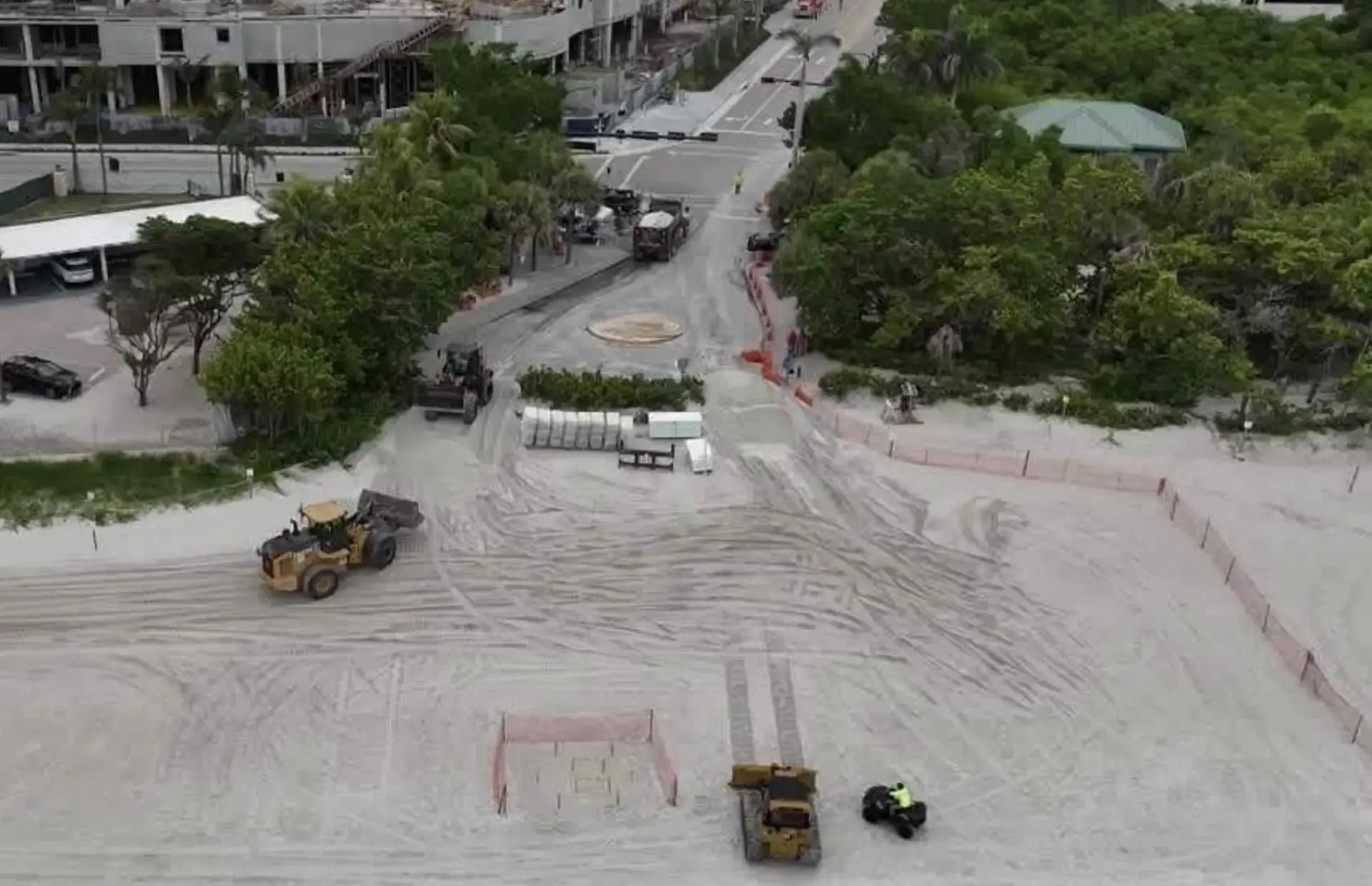
If the sand at Vanderbilt Beach has looked a little more “construction zone” than postcard lately, there’s a good reason: Collier County’s latest beach renourishment push is officially underway, and it’s a big one.
County crews and contractors are moving 216,000 tons of fresh sand onto Vanderbilt and Pelican Bay beaches as part of a 2025 renourishment project designed to rebuild dune lines, widen the beach, and keep our coastline storm-ready
This is part of a broader, multi-year effort to restore stretches of Collier’s shoreline after steady erosion and recent tropical seasons have chewed away at the sand. Similar work has already taken place at Park Shore this year, where more than 300,000 tons of sand were redistributed to bring that beach back to its target width.
What exactly is happening on the sand?
For this current phase, the county has hired Dickerson Infrastructure, Inc. to place and grade the sand along Vanderbilt and Pelican Bay under a competitively bid contract of about $4.45 million.
The sand is “beach-quality” material sourced from regional mines and trucked to the coast — a model Collier has used before. In a previous project, sand was hauled in 22-ton truckloads from Stewart Mining in Immokalee, roughly 30 miles inland, instead of dredging offshore.
Once on site, crews use heavy equipment to build up the beach profile and dunes to specific engineering targets, restoring both the recreational width of the beach and its ability to buffer storm surge.
Who’s paying for it?
Here’s the breakdown for this Vanderbilt & Pelican Bay renourishment round:
-
Total project cost (both beaches): $7.5 million (current estimate you provided).
-
Vanderbilt Beach share:
-
Public beach → eligible for tourist tax funding.
-
The Board of County Commissioners approved $5.5 million in Tourist Development Tax (TDT) funds for the Vanderbilt portion.
-
-
Pelican Bay Beach share:
-
Considered private access beach, so the Pelican Bay Services Division (PBSD) is picking up the tab.
-
PBSD documents estimate roughly $4.5 million to refill their beach template from just south of Vanderbilt down to Clam Pass, piggybacking on the County’s project.
-
For context: Collier’s Tourist Development Tax (currently 5%) is already a workhorse for local projects, with more than $36 million in TDT revenue collected through April 2025 alone. Those dollars help fund beach renourishment, tourism marketing, and other visitor-driven infrastructure
Timeline: When will the work wrap up?
Based on the county’s current schedule:
-
Vanderbilt Beach: targeted completion in early December 2025
-
Pelican Bay Beach: targeted completion in mid-January 2026
Work hours and holiday pauses:
-
Hours: Mondays through Saturdays, 7 a.m. to 7 p.m.
-
No work on Sundays
-
Thanksgiving break: Nov. 27–30, 2025
-
Christmas/New Year’s break: Dec. 24, 2025–Jan. 2, 2026
You can already see (and hear) the impact at Vanderbilt: crews, loaders, pipes, and a growing “new” beach building out from the waterline. The county has shared a short video clip of the work in action at Vanderbilt — a quick look at just how much sand it takes to rebuild a shoreline.
How will this affect your beach day?
Expect a “pardon our progress” vibe for the next several weeks:
-
Rolling work zones: Only short segments of beach are closed off at any one time, so access usually shifts along the shoreline rather than shutting everything down at once.
-
Noise & trucks: Daytime construction noise and truck traffic near access points will be noticeable while sand is being placed.
-
Access paths: Some boardwalks or paths may temporarily route you around active work zones.
-
Water access: The Gulf itself remains open outside active construction areas, but you may be asked to keep a safe distance from equipment and pipes.
If you’ve watched beach renourishment projects elsewhere in Florida — like the major Pinellas County effort underway after a string of recent hurricanes — you’ve seen how disruptive they can look in the short term, but they play a critical role in protecting homes, infrastructure, and wildlife from future storms.
Why renourishment matters for Collier
Beach renourishment isn’t just about nicer sand chairs and Instagram shots (though those are a bonus):
-
Storm protection: Wider, higher beaches absorb storm energy before it reaches buildings and roads.
-
Tourism engine: Our beaches are the front door for a tourism economy that generates record visitor tax revenues and supports local jobs.
-
Environmental benefits: Properly designed projects help rebuild dunes and habitat that protect sea turtle nests and shorebirds, especially when paired with monitoring and seasonal restrictions.
The U.S. Army Corps of Engineers and the State of Florida treat Collier’s beaches — including Vanderbilt and nearby Park Shore and Naples Beach — as part of a larger storm-damage reduction corridor on the Gulf.
Have questions or concerns?
For detailed project maps, schedules, and technical documents, Collier County’s Coastal Zone Management team has more information online.(Collier County)
If you want to talk directly with the people overseeing the work:
In the meantime, if you head to Vanderbilt or Pelican Bay and see the heavy equipment, think of it as a short-term construction zone for a long-term upgrade: more sand, stronger dunes, and a wider slice of Gulf shoreline for Collier residents and visitors to enjoy in 2026 and beyond.